
Rarely harvested in New Zealand
Manuka Honey
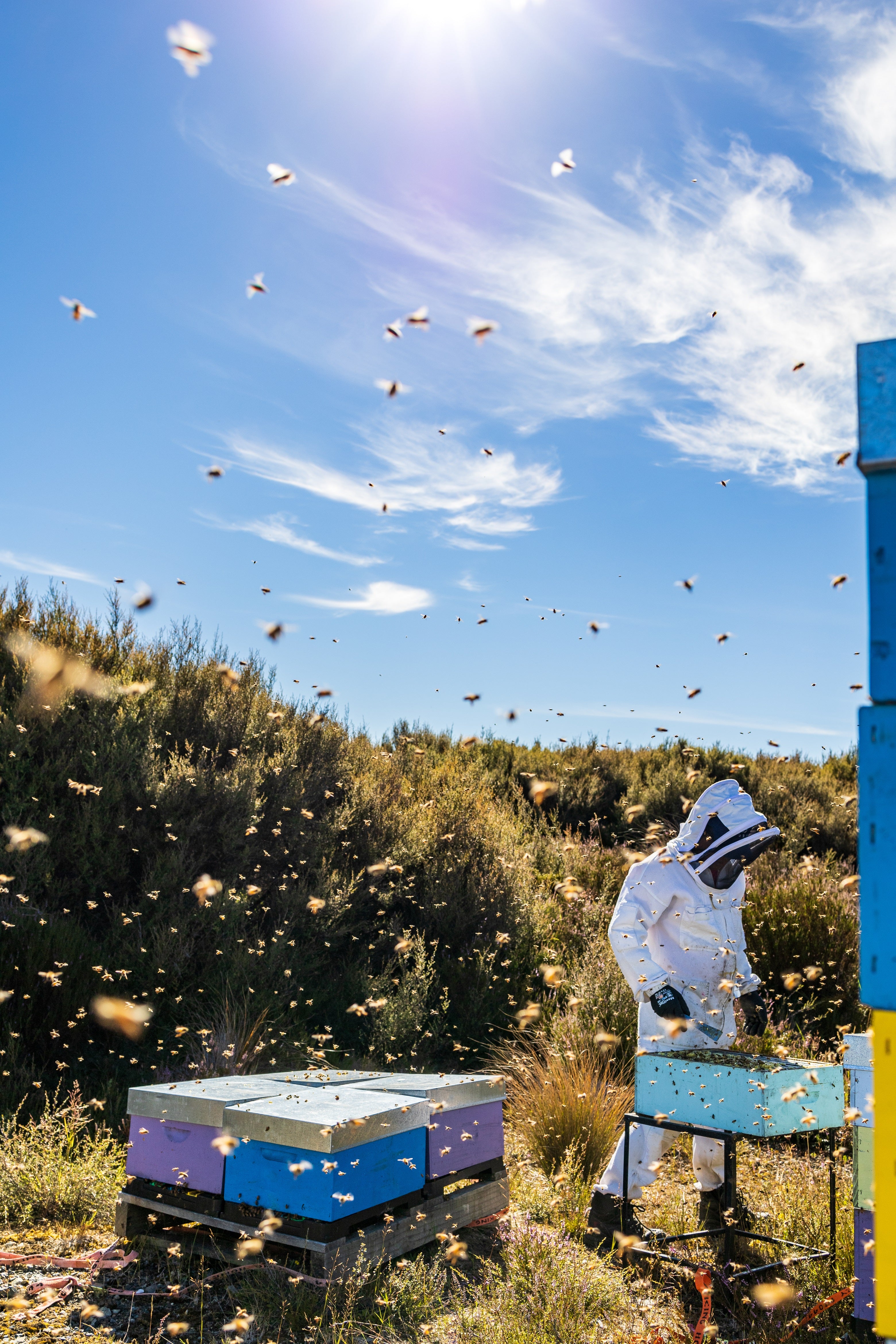
The Manuka bush flowers for only a few weeks each year, along the remote coastlines of New Zealand. That's when our beekeepers harvest. Every batch is UMF-licensed and lab-tested, so you know exactly what's in the jar.
What is Manuka Honey?
King of Honeys
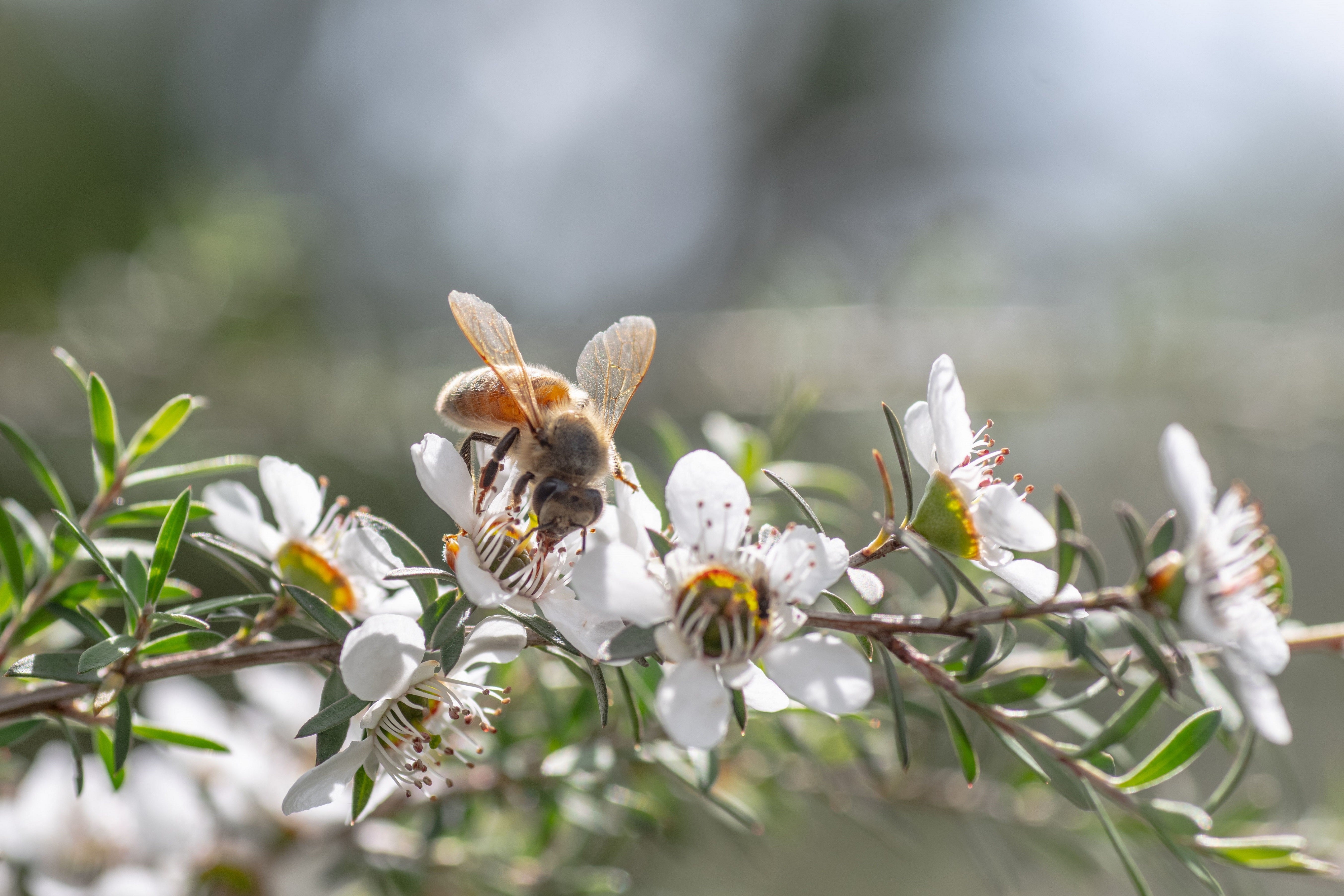
Manuka Honey comes from New Zealand, where bees collect nectar from the Manuka bush, known scientifically as Leptospermum scoparium. This shrub flowers for just a few weeks each year, deep in New Zealand's untouched wilderness.
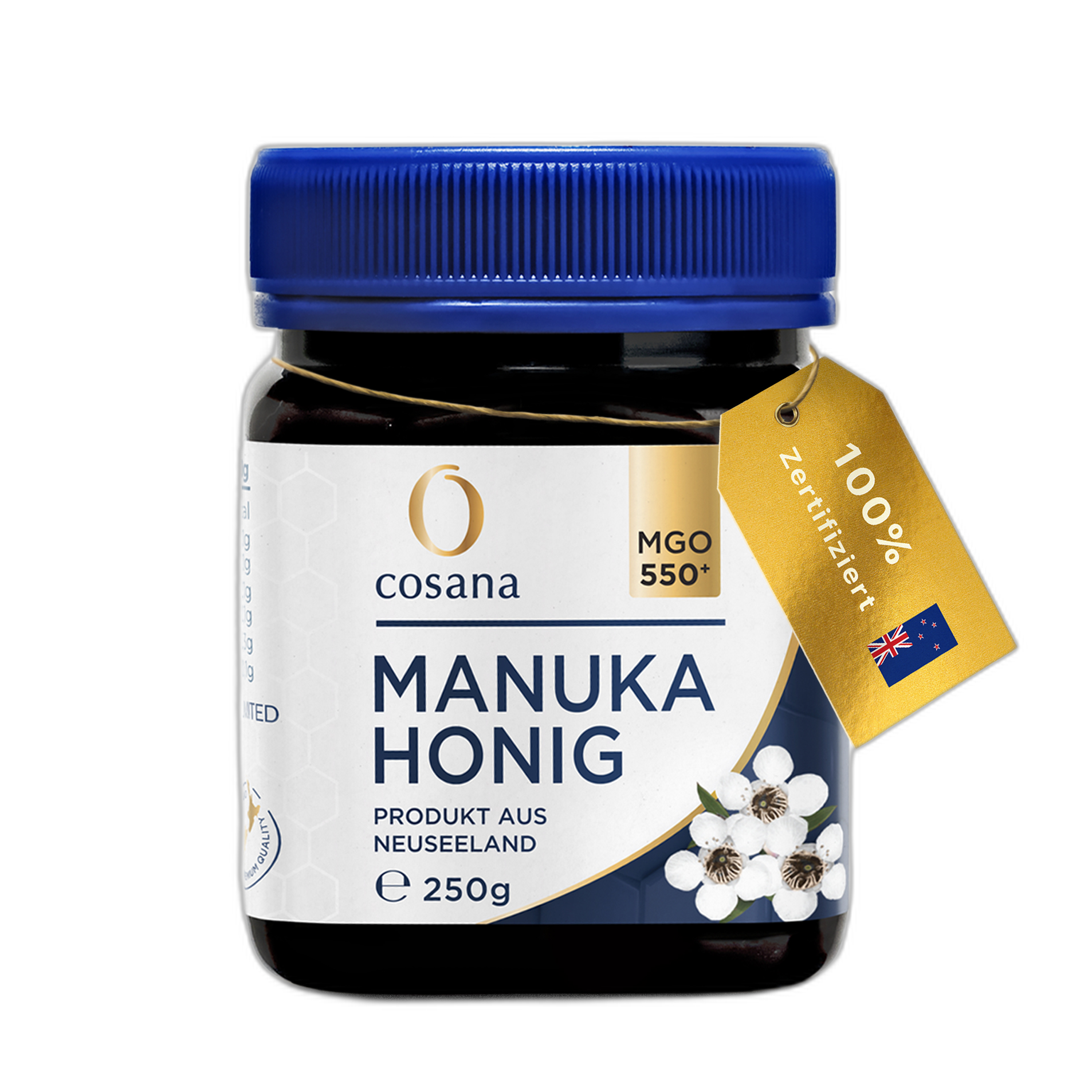
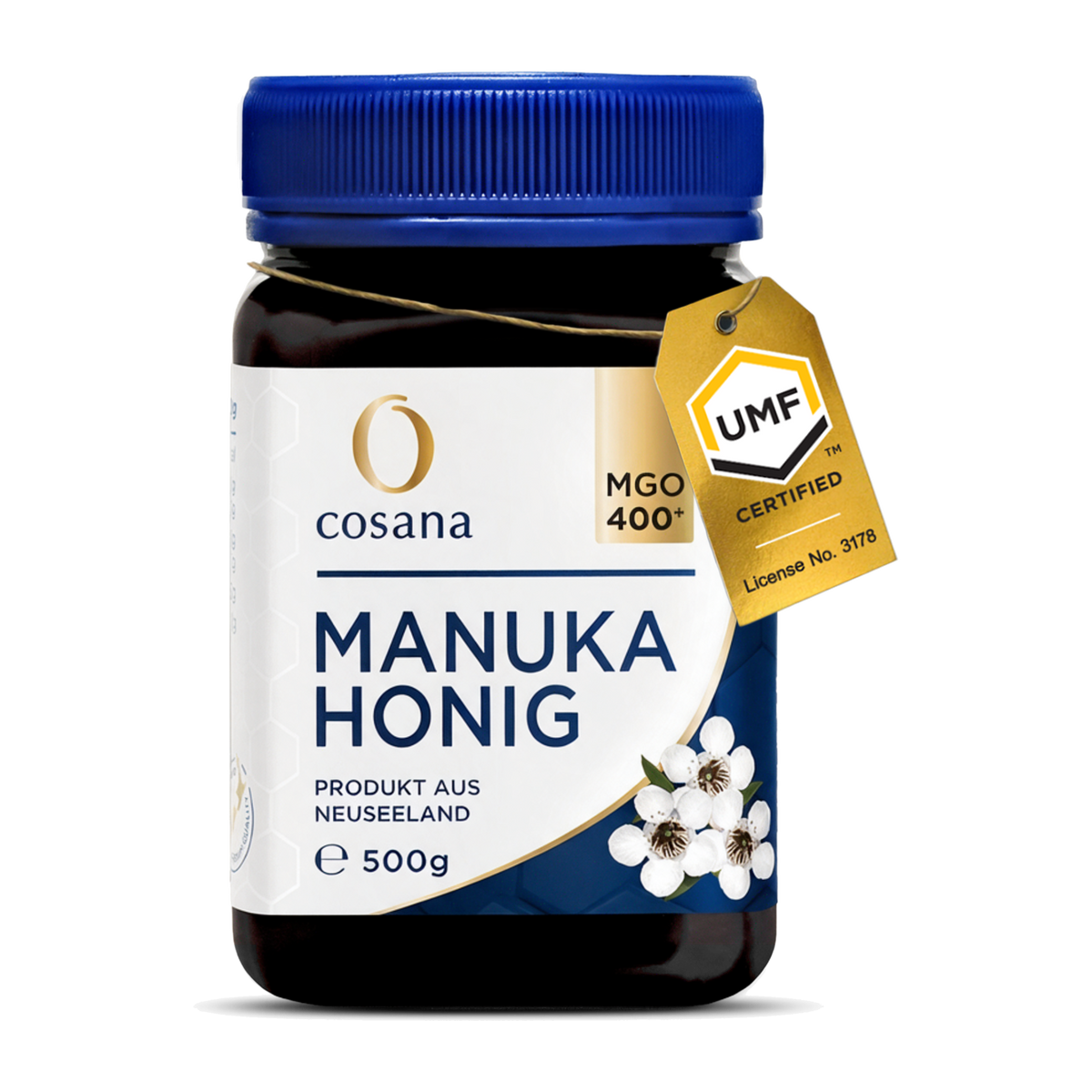
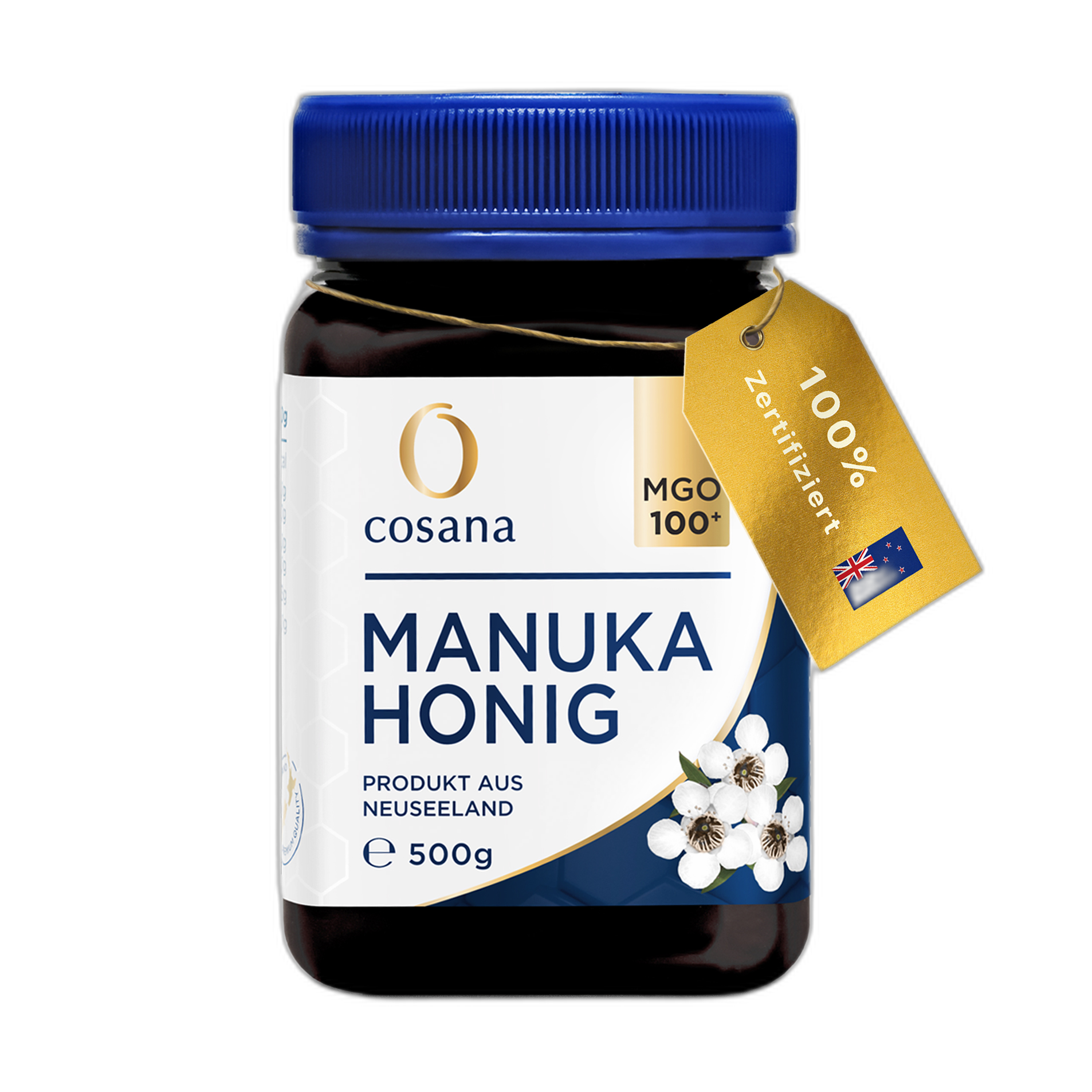
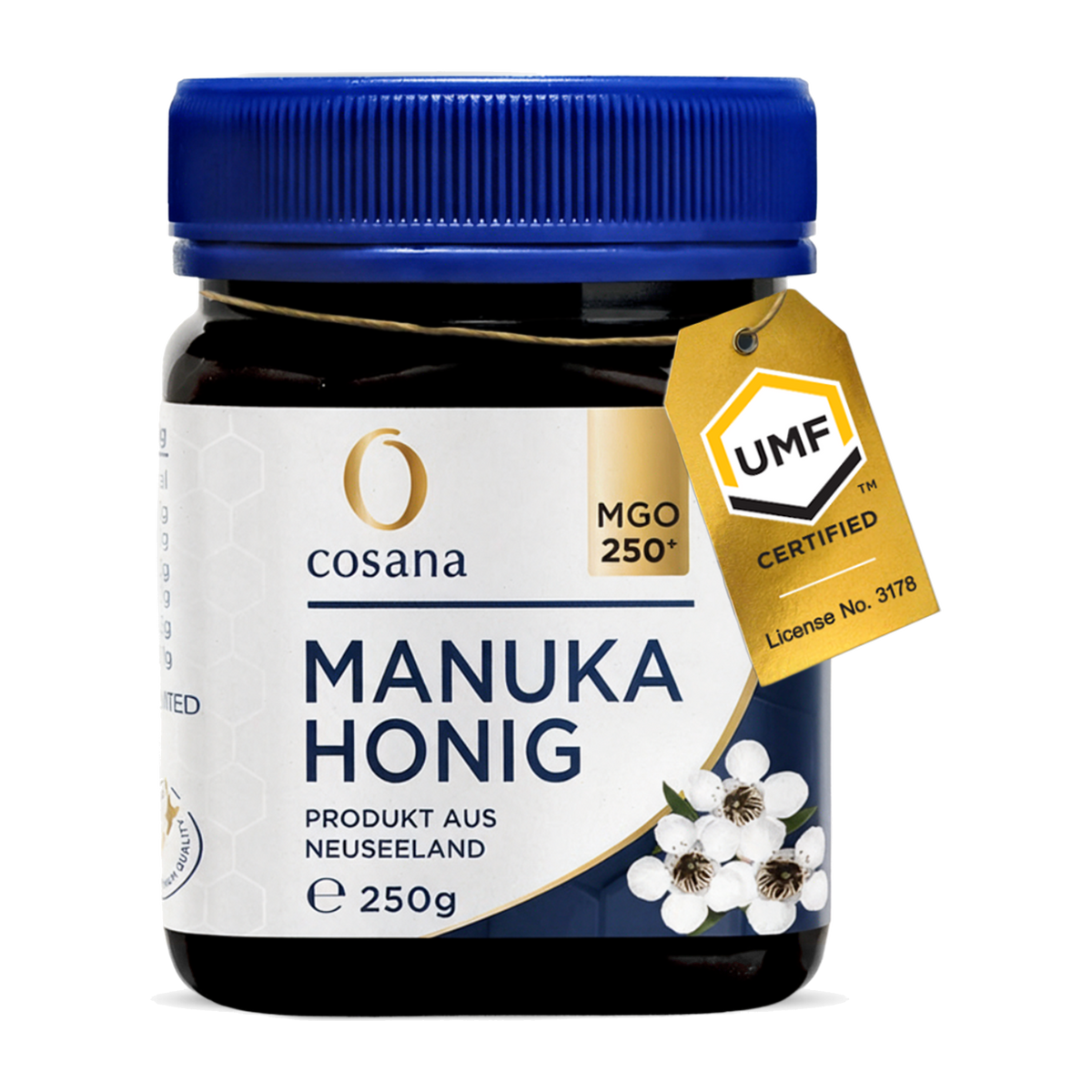
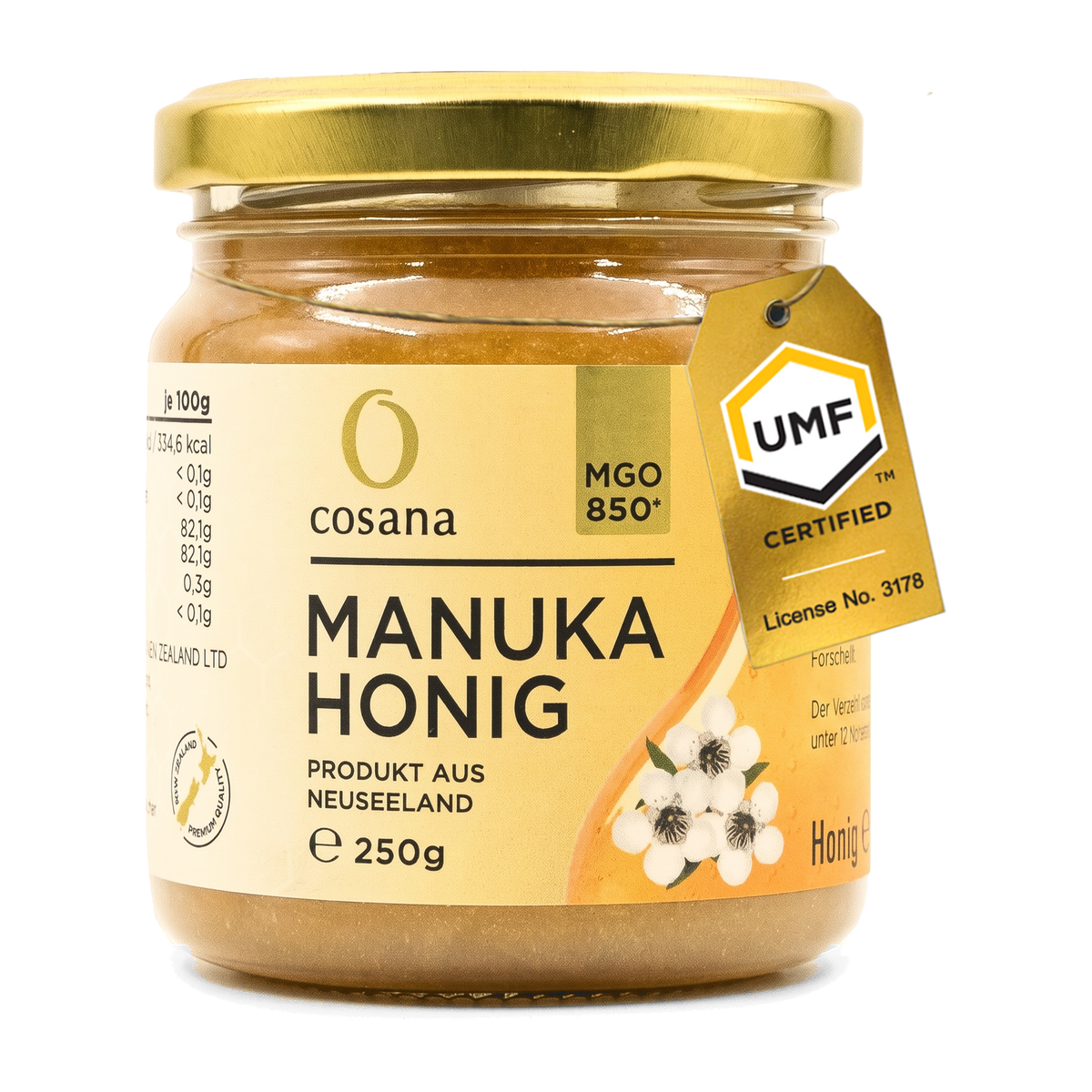
What separates Manuka from every other honey is its level of methylglyoxal, or MGO. MGO is stable, heat-resistant, and measurable in milligrams per kilogram - which is why Manuka can be graded the way it is. Every Cosana jar shows its tested MGO value, verified at Hill Labs in Hamilton, New Zealand.
Unique properties
Remarkably potent
Regular honey owes most of its character to hydrogen peroxide, which breaks down over time and with heat. Manuka Honey carries a second, stable marker - methylglyoxal (MGO) - that is heat-resistant and stays intact.
The higher the MGO content, the higher the grade. This stability and measurability make Manuka Honey one of the most remarkable natural products beekeeping has ever produced.
Every batch is independently lab-tested. Certificates available on request.
Understanding quality
The MGO rating system
The MGO rating measures methylglyoxal in milligrams per kilogram of honey - a measurable, heat-resistant compound, which is why Manuka can be graded at all.
The table shows the widely used grades as a reference framework. Our current Cosana jars cover the range from MGO 50+ to MGO 850+. Every jar shows its tested value, verified at Hill Labs in Hamilton, New Zealand.
Independent certification
What is UMF?
UMF stands for Unique Manuka Factor. It's the certification system run by the UMF Honey Association (UMFHA), an independent New Zealand body founded in 1998 by beekeepers who wanted a science-based standard for Manuka.
Every certified batch is tested in independent labs against four markers: MGO (methylglyoxal) for concentration, Leptosperin to verify authenticity, DHA (dihydroxyacetone), which converts to MGO over time, and HMF (hydroxymethylfurfural), which shows the honey hasn't been overheated or aged.
To carry the UMF mark, members commit to standards that go beyond New Zealand law: full batch traceability, accredited lab testing, and ongoing audits. Cosana holds UMF License No. 3178.
UMF & MGO,
at a glance.
Industry approximation
UMF and MGO measure overlapping but distinct things. UMF reflects a broader signature unique to mānuka nectar; MGO is a single-compound count in milligrams per kilogram. The thresholds shown here are widely-published industry approximations, used as a guide.
MGO vs UMF
MGO measures one thing, UMF measures four.
MGO measures one thing: the methylglyoxal concentration in milligrams per kilogram. That's it.
UMF is broader. It measures MGO as well, and includes Leptosperin (authenticity), DHA (shelf-life stability) and HMF (freshness). A UMF rating means the honey has cleared all four tests, not just one.
Because both scales share the methylglyoxal measurement, you can convert between them. See the comparison table on the left, or read the official UMF standard at umf.org.nz.
Values are approximate minimums based on the UMF Honey Association conversion. Actual MGO content varies slightly between batches, and every Cosana jar shows its own tested value via the QR code.
Our products
Home page
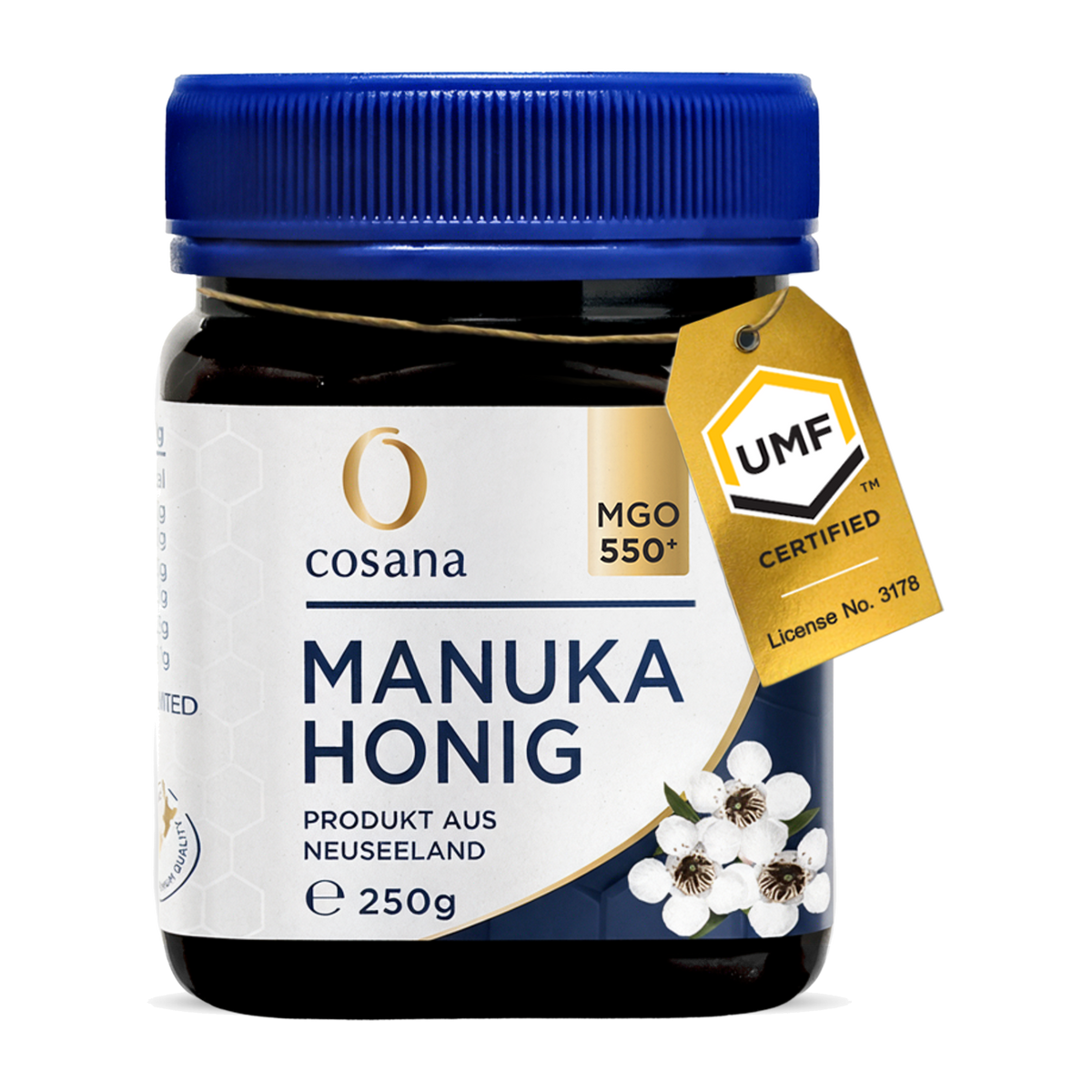
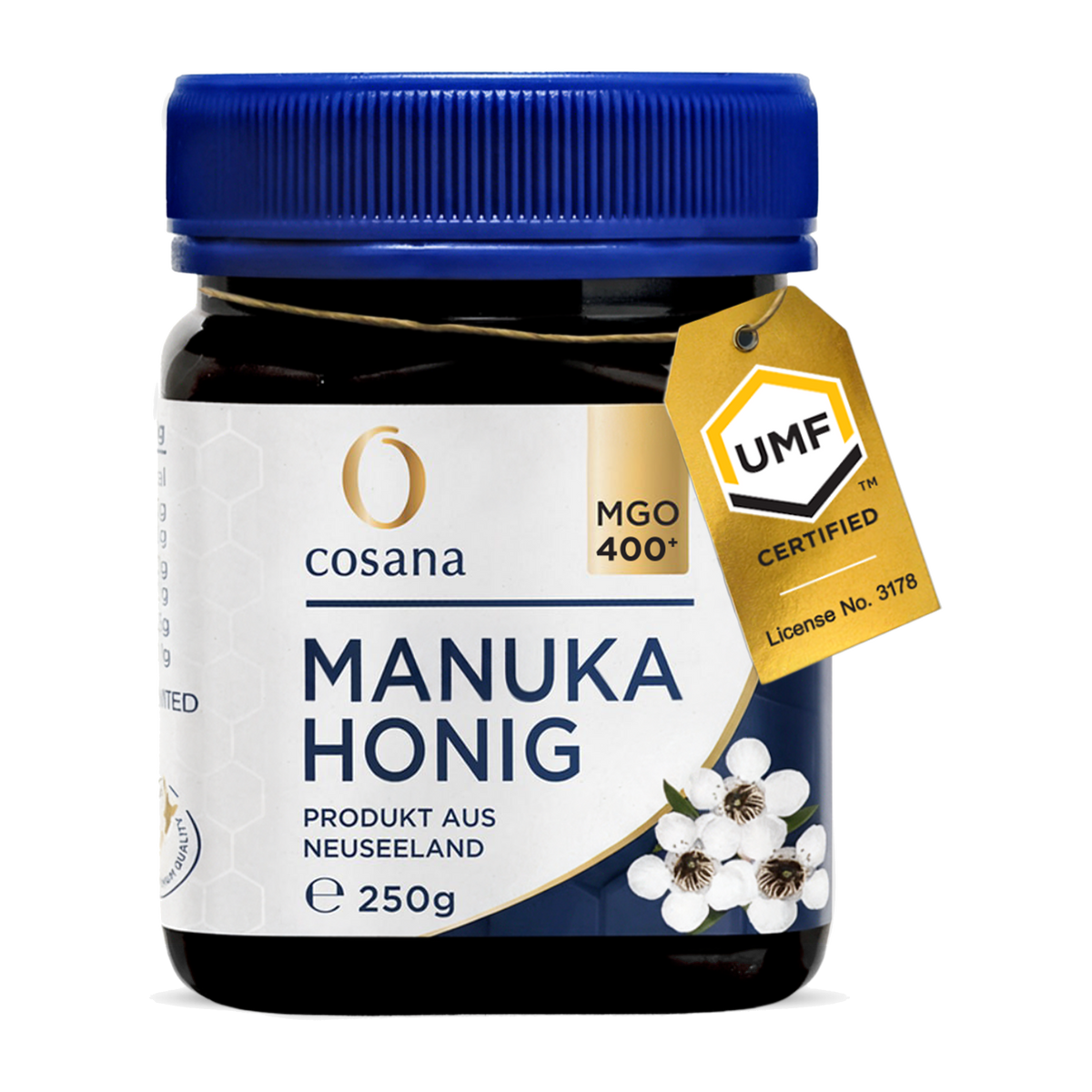
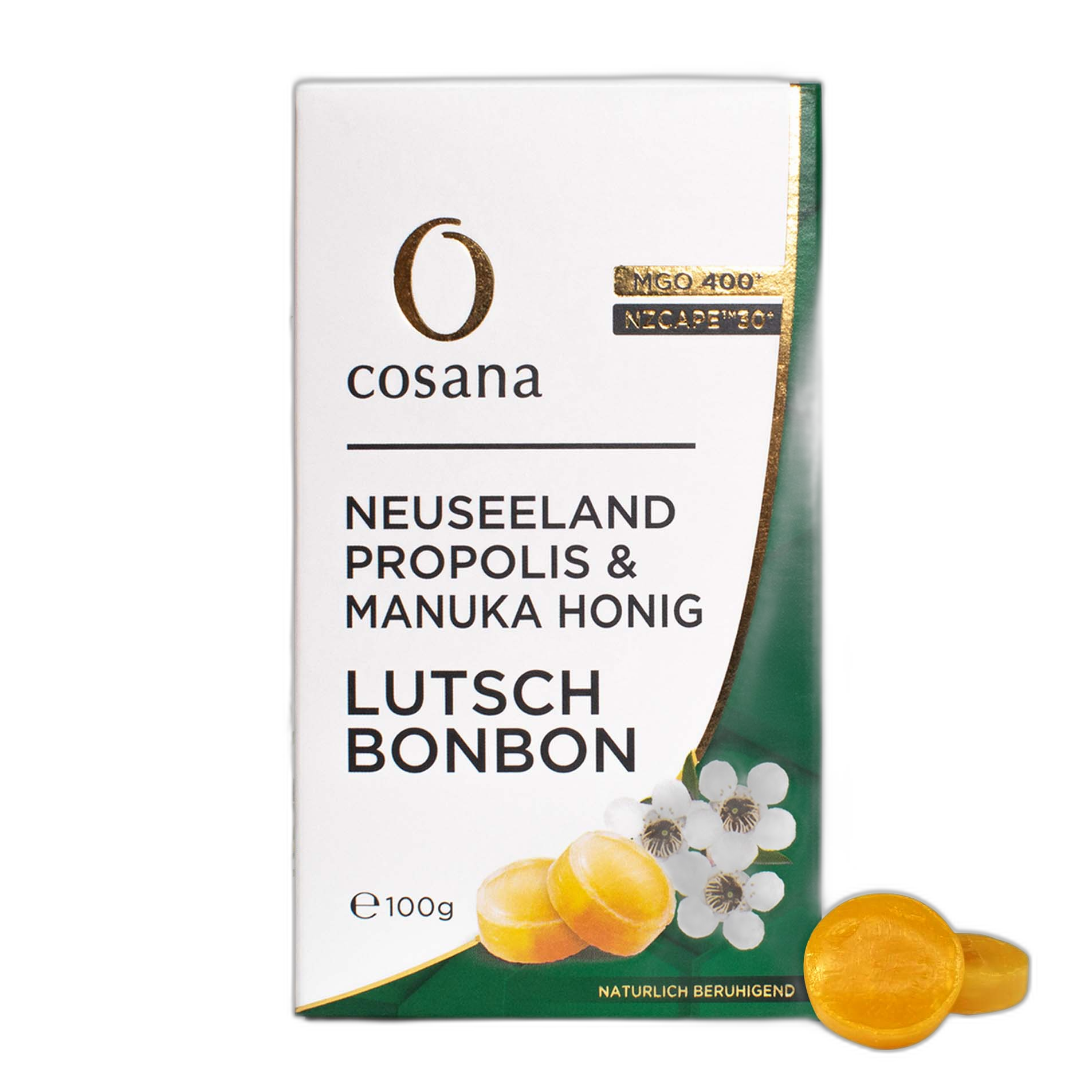
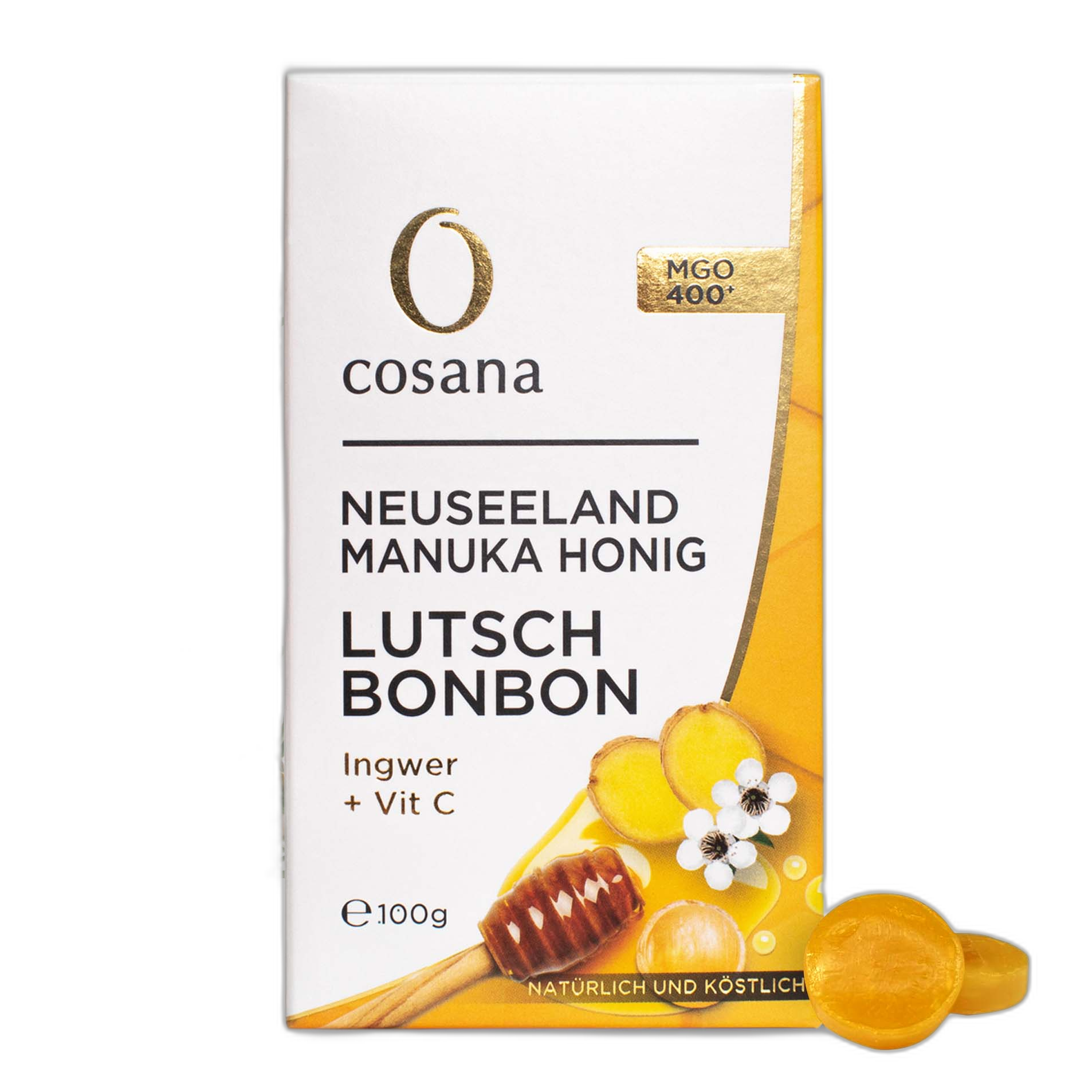
Find your Manuka honey